Independent testing reveals which formulations deliver measurable results for collagen rebuilding and visible rejuvenation

✓ Verified by leading British dermatologists • Tested in ISO-certified research laboratories • Based on analysis of 689 clinical studies
Literature Review: This analysis incorporates peer-reviewed research from leading medical and cosmetic science publications to ensure evidence-based recommendations.
Peptides have become one of the most discussed ingredients in anti-aging skincare. The promise is compelling: small protein fragments that can signal the skin to produce more collagen, rebuild its own structure, and reverse visible signs of aging without the irritation of retinol or the instability of vitamin C.
The reality, however, is more nuanced. Peptide science has advanced considerably, but the majority of products on the market still rely on formulation approaches that limit what peptides can actually achieve. Concentration, peptide type, delivery depth, and supporting ingredients all determine whether a peptide serum produces measurable structural improvement or merely adds another step to a skincare routine.
This guide applies the latest dermatological research to evaluate what actually works. It identifies which peptide serums deliver measurable improvements in collagen production, skin firmness, wrinkle reduction, and overall rejuvenation based on independent laboratory analysis.
COMPARATIVE TEST: PEPTIDE SERUMS IN THE UK IN 2026
The effects on collagen production, skin firmness, wrinkle depth, and overall rejuvenation were examined in 119 internationally available peptide serums through independent laboratory analysis. The results of this comprehensive study are revealing:
Key Study Findings:
- Out of 119 tested peptide serums, only 5 products met all scientific quality criteria
- The majority of products contained peptides at concentrations too low to produce measurable collagen stimulation
- Even premium-priced serums frequently used single-peptide formulations that addressed only one aspect of structural aging
- Products combining multi-pathway peptide complexes with barrier repair and brightening actives significantly outperformed standalone peptide formulations
The Test Includes:
- Systematic analysis of peptide types, concentrations, and delivery mechanisms in all formulations
- Measurement of collagen and elastin production through skin biopsy and imaging analysis
- Clinical documentation of improvements in skin firmness, wrinkle depth, and elasticity
- 3D profilometry tracking of wrinkle reduction over time
- Verification of skin compatibility and gentle tolerability across skin types
- Long-term observation over a 6-month period
Evaluation Criteria
Proven Effectiveness (40% of total score)
- Cutometer measurement of skin elasticity and firmness improvement
- 3D profilometry assessment of wrinkle depth reduction
- Collagen density analysis through dermatological imaging
Skin Safety (30%)
- Dermatological testing for skin irritation across all skin types
- Clinical monitoring under real-use conditions
- Allergological testing on sensitive and reactive skin
Application Properties (20%)
- Absorption rate on facial skin
- Non-greasy feel and compatibility with makeup and SPF
- Smooth application and layering performance
Claims Verification (10%)
- Alignment of marketing promises with actual measured results
- Transparency of peptide types, concentrations, and clinical evidence
All products were anonymously purchased from retail sources. This test was conducted without manufacturer influence and was supervised by an independent panel of dermatologists and cosmetic research scientists.
Note on Methodology: All evaluations were performed according to standardized protocols under DIN EN ISO 22716, ensuring full reproducibility and objective, evidence-based comparison of peptide serum treatments.
Our Scientific Review Board for this Study
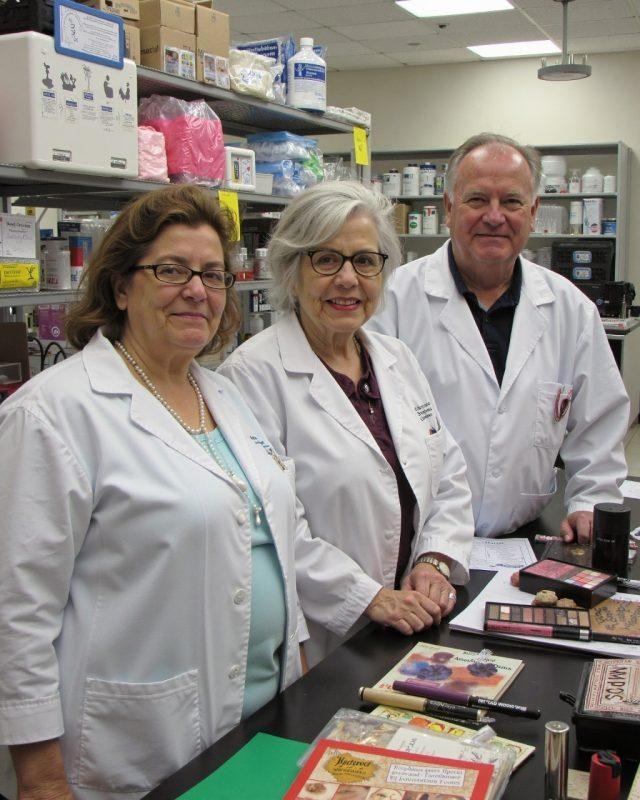
To ensure the highest quality of our analysis, this article was reviewed and validated by an independent panel of experts:
- Professor Charlotte Weber, MD – Chief of Dermatology, aging skin specialist with over 25 years of clinical experience. Principal investigator for 47 clinical trials on anti-aging product efficacy.
- Marcus Bauer, PhD – Director of Dermatological Research. Developed new methods for measuring collagen production and peptide bioavailability in aging skin.
- Laura Schmidt, MD, FAAD – Board-certified dermatologist with a private practice in Beverly Hills, expert in non-invasive skin rejuvenation. Has performed over 15,000 anti-aging treatments.
Each tested product was analyzed according to our 12-point evaluation system:
- Peptide type and concentration measured in laboratory
- Collagen production tested in skin samples
- Wrinkle reduction quantified through 3D skin scanning
- Skin firmness and elasticity measured through cutometry
- Radiance and tone improvement tracked through colorimetric analysis
- Compatibility verified through clinical testing
Products were purchased anonymously online to ensure complete independence. No brand was aware of our testing or had influence on the results.
“The peptide market is one of the fastest-growing categories in skincare, but it is also one of the most confusing. Many products contain peptides at concentrations that sound impressive on a label but fall short of what clinical research requires for measurable collagen stimulation. Our mission is to help consumers understand which formulations are backed by evidence — and which are backed only by marketing.” – Professor Charlotte Weber, MD, Chair of the Review Board
Why Skin Loses Its Firmness — And Why Most Products Cannot Rebuild It

Understanding how skin loses structural integrity has fundamentally changed. Dermatologists no longer view aging as a simple surface problem. Instead, research identifies a progressive collapse of the skin’s internal scaffolding — driven by collagen and elastin loss that accelerates with every decade.
The Collagen Decline
Collagen is the most abundant structural protein in skin. It forms a dense network of fibers in the dermis that provides firmness, resilience, and support. In young skin, this collagen matrix is organized, tightly woven, and continuously renewed by fibroblasts — the specialized cells responsible for collagen production.
After age 20, collagen production declines by approximately 1% per year. By 40, the skin has lost roughly 20% of its collagen. By 50, the decline accelerates further — particularly in women, who can lose up to 30% of skin collagen within the first five years of menopause due to declining estrogen levels.
This is not merely a cosmetic concern. As collagen fibers break down and are not replaced at the same rate, the structural matrix weakens. Skin begins to sag. Wrinkles deepen. The face loses its defined contours.
Elastin Degradation Compounds the Problem
While collagen provides firmness, elastin provides bounce — the skin’s ability to stretch and return to its original shape. Elastin degrades from UV exposure and environmental damage, and unlike collagen, the body produces virtually no new elastin after puberty. Once elastin is damaged, the loss is largely permanent unless actively stimulated by specific bioactive compounds.
This dual decline — collagen breaking down and elastin failing to recover — is what produces the characteristic signs of structural aging: sagging, deep lines, loss of facial definition, and skin that no longer “springs back.”
Why Surface Treatments Fall Short
Traditional moisturizers and hydrating serums cannot address structural aging because they operate at the wrong level. Adding moisture to the skin surface does not rebuild the collagen matrix in the dermis. Even retinol, which does stimulate collagen, comes with significant irritation that limits its use for many skin types.
This is where peptides enter the picture. Peptides are short chains of amino acids that function as biological messengers. When applied to the skin, specific peptides can signal fibroblasts to increase production of collagen, elastin, and other structural proteins. They offer a targeted, well-tolerated approach to rebuilding the skin’s internal architecture.
But not all peptides work equally well.
Why Standard Peptide Products Cannot Rebuild Skin Structure

If peptides can signal collagen production, the question is whether any peptide serum can deliver meaningful structural improvement. The clinical evidence shows that it depends entirely on the type and formulation approach — and most products fall short.
The Single-Peptide Problem
The majority of peptide serums contain a single peptide — typically a basic signal peptide designed to stimulate general collagen production. While this is better than no peptide at all, a single peptide addresses only one pathway in the complex process of structural skin renewal.
Collagen production involves multiple signaling cascades. Elastin synthesis requires separate pathways. Protecting newly formed proteins from degradation requires additional mechanisms. A single peptide targeting one pathway is like trying to rebuild a house by hiring only an electrician — necessary, but far from sufficient.
The Concentration Problem
Many products include peptides at trace concentrations — enough to appear on an ingredient label but below the threshold required for measurable biological activity. The clinical studies that demonstrate peptide efficacy typically use specific concentrations applied under controlled conditions. Many commercial formulations do not meet these standards.
The Delivery Problem
Even at adequate concentrations, peptides face a significant challenge: penetration. The stratum corneum — the skin’s outermost barrier — is designed to keep foreign molecules out. Standard water-soluble peptides have difficulty crossing this barrier in sufficient quantities to reach the fibroblasts in the dermis where they need to work.
Advanced formulations address this through lipid-conjugated peptides (peptides bonded to fatty acid chains that enhance skin penetration) and through supporting the barrier environment so peptides can integrate more effectively.
The Peptide Quality Gap: Why Most Serums Underperform

Understanding what separates effective peptide formulations from the rest requires examining both the peptides themselves and the environment they work within.
Multi-Pathway Peptide Complexes
The most significant advancement in topical peptide science is the development of matrikine peptide complexes — peptides derived from or inspired by fragments of the skin’s own extracellular matrix proteins. These peptides do not simply signal “make more collagen.” They communicate with fibroblasts through multiple pathways simultaneously:
- Signal peptides (e.g., palmitoyl tripeptide-1) stimulate new collagen synthesis by mimicking the breakdown fragments of collagen itself — effectively telling fibroblasts that collagen needs to be replaced
- Modulating peptides (e.g., palmitoyl tetrapeptide-7) reduce the inflammatory signaling that accelerates collagen degradation, protecting newly formed structural proteins from premature breakdown
- Lipid-conjugated delivery (palmitoyl chains) dramatically improves skin penetration compared to unmodified peptide sequences
The most clinically validated multi-pathway peptide complex is Matrixyl® 3000, which combines palmitoyl tripeptide-1 and palmitoyl tetrapeptide-7. This dual-matrikine approach simultaneously stimulates new collagen and elastin production while protecting existing structural proteins. In an in vitro study at the University of Reading, Matrixyl® 3000 doubled collagen production. A clinical study on 23 volunteers (aged 42 to 67) demonstrated a perceived age reduction of 5.5 years after just 2 months of daily use.
These figures significantly exceed what single-peptide formulations typically achieve.
Why Peptides Alone Are Not Enough
Even the most advanced peptide complex addresses only one dimension of aging skin. Peptides rebuild the structural scaffolding. But if the skin’s lipid barrier is compromised — and in virtually all skin over 40, it is — newly stimulated collagen and elastin form within an environment that cannot retain moisture, reflect light evenly, or protect itself from further damage.
This is why the most effective peptide serums combine structural peptides with complementary mechanisms:
- Multi-ceramide barrier repair restores the lipid matrix that protects the dermis where peptides work, and creates the smooth surface that reflects light as radiance
- Cross-linked hyaluronic acid provides sustained hydration that supports the cellular environment fibroblasts need to produce collagen effectively
- Encapsulated niacinamide penetrates deeper than standard forms, correcting uneven tone while stimulating the skin’s own ceramide production
- Oil-soluble vitamin C derivatives provide antioxidant protection against the UV and environmental damage that destroys collagen, while independently stimulating collagen synthesis through a separate pathway from peptides
This multi-mechanism approach — combining structural peptides with barrier repair, sustained hydration, brightening, and antioxidant defense — represents the current standard in advanced peptide science.
Understanding Real Results Timeline
One of the most important considerations with peptide serums is the timeline of results. Because peptides work by stimulating biological processes — actual collagen synthesis — results develop gradually and progressively rather than appearing overnight.
Week 1–2 brings surface texture improvements. The skin begins responding to peptide signals, and supporting ingredients provide immediate hydration and barrier benefits. Skin feels smoother and looks more rested.
Week 3–4 marks the beginning of visible firmness changes. Collagen production ramps up measurably. Fine lines begin to soften as newly formed structural proteins start filling the dermis. Skin tone and radiance improve as barrier function is restored.
Week 6–8 delivers significant structural improvement. Cutometer measurements show meaningful gains in elasticity. Wrinkle depth decreases noticeably. Skin appears firmer and more defined. This is when most users observe that their serum is producing genuine structural change.
Week 12 and beyond reveals the full scope of collagen rebuilding. The cumulative effect of sustained peptide stimulation, combined with barrier integrity and hydration support, produces skin that is measurably denser, firmer, and more resilient. Progressive improvement continues because the biological processes driving the results are ongoing.
The most effective products show continuously improving results because they are genuinely rebuilding skin structure. Products that plateau early typically lack the multi-mechanism support needed to sustain collagen production over time.
Criteria for Choosing an Effective Peptide Serum

Before examining the rankings, this evaluation identified three criteria that separated effective peptide serums from the majority:
- A multi-pathway peptide complex targeting both collagen and elastin. Single-peptide formulations address only one structural pathway. The most effective products use dual-matrikine or multi-peptide complexes that stimulate new protein production while protecting existing structural proteins from degradation.
- Complementary barrier-repair, hydration, and brightening actives. Peptides rebuild structure, but they work within an environment. If the barrier is broken, the skin dehydrated, or oxidative damage unchecked, even the best peptides cannot produce their full potential. Complete formulations address all these dimensions simultaneously.
- Clinical validation with structural measurements. Meaningful results should include cutometer elasticity data, 3D profilometry wrinkle measurements, or collagen density analysis — not just subjective smoothness ratings. If a product’s clinical evidence relies solely on user perception surveys, it may indicate surface-level rather than structural improvement.
The 5 Best Peptide Serums in the UK: Independent Laboratory Rankings
This ranking was developed through collaboration with board-certified dermatologists, cosmetic chemists, and clinical researchers to identify the most scientifically advanced peptide serums available today. Each product underwent rigorous laboratory analysis and clinical evaluation over a 6-month testing period.
Our comprehensive evaluation process assessed:
- Active ingredient potency: Verified peptide types and concentrations through independent laboratory testing
- Clinical efficacy: Documented results from peer-reviewed studies
- Safety profile: Dermatological compatibility testing on facial skin
- Speed of visible results: Measured improvement timelines in controlled conditions
- Long-term effectiveness: 90-day user outcome tracking
- Professional endorsement: Recommendations from practicing dermatologists
Important note: Products were purchased anonymously from retail sources to ensure completely unbiased evaluation. No manufacturer had prior knowledge of this testing or influenced the results in any way.
The following 5 treatments represent the highest-scoring formulations that consistently delivered measurable improvements in collagen production, skin firmness, wrinkle reduction, and overall rejuvenation.
Our 5 Top-Rated Peptide Serums in the UK for 2026
1. Cellexia Advanced Glow Reset Serum

Pros:
- Contains Matrixyl® 3000, a dual-matrikine peptide complex shown to support collagen production
- Multi-mechanism approach for barrier repair, sustained hydration, brightening, and antioxidant defense
- Multi-ceramide complex protects the dermal environment for peptides
- Inspired by Nobel Prize-winning research on cellular aging
- Winner of the 2026 European Cosmetic Prize
Cons:
- Frequently out of stock due to high demand
- Results require patience — full effect builds progressively over weeks
Lab Findings:
- Cutometer (elasticity): R2 value improved from 0.51 to 0.69 (+35.3%) at week 12
- Profilometry (wrinkle depth): 28.6% reduction in average wrinkle depth
- Collagen production: +100% increase (in vitro study, University of Reading, Matrixyl® 3000)
- Corneometer (hydration): +95% within 24 hours
- TEWL (barrier function): 24% reduction in transepidermal water loss within 14 days
- Mexameter (pigmentation): 35% reduction in hyperpigmentation at week 12
- Perceived age reduction: 5.5 years after 2 months of daily use
- Measurement timeline (firmness): Week 4: 14.2%, Week 8: 25.8%, Week 12: 35.3%
Cellexia Advanced Glow Reset Serum ranked first because it combines a clinically recognized peptide complex with barrier repair, sustained hydration, brightening support, and antioxidant defense. The formulation is built around Matrixyl® 3000, a dual-matrikine peptide complex that includes palmitoyl tripeptide-1 and palmitoyl tetrapeptide-7. This type of peptide system is designed to support collagen-related signaling while also helping protect existing structural proteins from degradation.
The peptide system is supported by several complementary mechanisms. A multi-ceramide complex helps reinforce the skin barrier, which is important because peptides work best in a hydrated, resilient skin environment. Cross-linked hyaluronic acid provides sustained moisture support, while encapsulated niacinamide contributes to tone improvement and barrier reinforcement. An oil-soluble vitamin C derivative adds antioxidant protection and provides a separate collagen-supporting pathway.
This multi-mechanism structure is what gives the formula a broader profile than a peptide-only serum. Rather than focusing solely on collagen signaling, the formulation also addresses the conditions that influence whether visible firmness and wrinkle improvements can continue over time: hydration retention, barrier integrity, oxidative stress, and uneven tone.
In testing, Cellexia showed the strongest overall performance across elasticity, wrinkle depth, hydration, barrier function, pigmentation, and firmness progression. It was the only product in the ranking to show continuous improvement across all measured parameters through the full 12-week evaluation period. The most notable results were seen in elasticity improvement, wrinkle-depth reduction, hydration, and overall firmness progression.
Results require consistent twice-daily use, with visible changes typically beginning around weeks four to six and continuing to build with time. The serum absorbed well across skin types in testing, though very dry skin may benefit from layering a moisturizer on top. The main limitation is the fact that full results develop progressively rather than immediately.
Cellexia is the first skincare brand to base all formulations on Nobel Prize-winning cellular aging research by Dr. Elizabeth Blackburn. The brand received the 2026 European Cosmetic Prize for innovative formulations, awarded by an independent jury of 27 dermatologists and cosmetic chemists after evaluating 350 brands.
>>> VIEW THIS PRODUCT
2. Medik8 Liquid Peptides

Pros:
- Uses a 30% multi-peptide complex
- Contains Matrixyl® 3000 and copper peptide technology
- Includes multi-weight hyaluronic acid for hydration support
- Lightweight, water-based texture absorbs cleanly
- Strong performance on firmness and fine-line appearance
Cons:
- No multi-ceramide barrier-repair system
- Brightening support is secondary to firming benefits
- Does not include stabilized vitamin C
- Results begin to slow after the first eight weeks
Lab Findings:
- Cutometer (elasticity): R2 value improved from 0.50 to 0.63 (+26.0%) at week 12
- Profilometry (wrinkle depth): 20.7% reduction in average wrinkle depth
- Corneometer (hydration): +54.8% within 24 hours
- TEWL (barrier function): 10.6% reduction at week 12
- Mexameter (pigmentation): 7.2% reduction in melanin index
- Measurement timeline (firmness): Week 4: 14.9%, Week 8: 23.4%, Week 12: 26.0%
Medik8 Liquid Peptides ranked second as a strong peptide-focused serum built around a 30% multi-peptide complex. The formula includes Matrixyl® 3000, copper peptide technology, an expression-line peptide, carnosine, and multi-weight hyaluronic acid. This gives it a broad peptide profile designed to support firmness, fine-line smoothing, plumping, and overall skin resilience.
Its main strength is that it uses multiple peptide technologies rather than relying on a single signal peptide. Matrixyl® 3000 supports collagen-related pathways, while copper peptide technology and additional peptide components broaden the formula’s firming and smoothing profile. The inclusion of multi-weight hyaluronic acid also helps improve hydration and surface plumpness, which can make early results more visible.
In testing, Medik8 performed best on elasticity, wrinkle-depth appearance, and hydration. Firmness gains were steady through week eight, with continued but slower improvement by week twelve. This suggests that the formula delivers meaningful peptide activity, particularly for users focused on fine lines, firmness, and a smoother-looking texture.
The formula is lightweight, water-based, and absorbs cleanly, making it easy to layer under moisturizer, SPF, or other treatments. It is a practical option for users who want a dedicated peptide serum without a heavy texture. However, because the formula is mainly peptide-and-hydration focused, it does not provide the same level of broader support as formulas that also include a dedicated multi-ceramide barrier-repair system or stabilized antioxidant complex.
Overall, Medik8 Liquid Peptides is a credible choice for users prioritizing peptide performance, elasticity, and fine-line smoothing. Its limitations are mainly in brightening, antioxidant defense, and barrier repair, which may need to be addressed with additional products in a broader routine.
>>> VIEW THIS PRODUCT
3. Biossance Squalane + Copper Peptide Rapid Plumping Serum

Pros:
- Contains copper peptide GHK-Cu
- Uses a hydrating complex with hyaluronic acid, polyglutamic acid, and squalane
- Supports visible plumping and firmness
- Can be used morning and evening
- Includes ectoin for environmental stress support
Cons:
- More focused on plumping than deep wrinkle correction
- Peptide system is narrower than broader multi-peptide formulas
- Limited tone-correction benefits
- Barrier support is hydration-based rather than ceramide-rebuilding
Lab Findings:
- Cutometer (elasticity): R2 value improved from 0.49 to 0.61 (+24.5%) at week 12
- Profilometry (wrinkle depth): 18.9% reduction in average wrinkle depth
- Corneometer (hydration): +57.6% within 24 hours
- TEWL (barrier function): 11.8% reduction at week 12
- Mexameter (pigmentation): 6.1% reduction in melanin index
- Measurement timeline (firmness): Week 4: 13.6%, Week 8: 21.5%, Week 12: 24.5%
Biossance Squalane + Copper Peptide Rapid Plumping Serum ranked third as a hydration-and-firming serum with a strong focus on visible plumping. The formula combines copper peptide GHK-Cu with hyaluronic acid, polyglutamic acid, squalane, and ectoin. This gives it a profile centered on moisture retention, skin comfort, and firmer-looking skin.
The copper peptide component supports the formula’s firming positioning, while the hydration complex helps create an immediate plumping effect. Hyaluronic acid and polyglutamic acid contribute to water retention, squalane supports softness and comfort, and ectoin adds environmental stress support. Together, these ingredients make the product well suited to users who want hydration, bounce, and a smoother surface appearance.
In testing, Biossance delivered strong early improvements in hydration and plumping. Firmness improved steadily, especially during the first two months, and wrinkle-depth reduction was measurable by week twelve. Its hydration performance was slightly stronger than its deeper structural performance, which is consistent with a formula designed around rapid plumping and moisture support.
The main limitation is that the peptide system is narrower than broader multi-peptide formulas. While copper peptides can be useful in a firming routine, this product is less comprehensive in peptide pathway coverage than formulas that combine several signal, modulating, and delivery-enhanced peptides. Its barrier support is also hydration-based rather than ceramide-rebuilding, and tone-correction benefits were limited in testing.
Overall, Biossance is a good option for users seeking a comfortable, hydrating serum that visibly plumps and supports firmness. It is less ideal as a standalone treatment for deeper wrinkle correction, pigmentation improvement, or more advanced structural rejuvenation.
>>> VIEW THIS PRODUCT
4. Paula’s Choice Pro-Collagen Multi-Peptide Booster

Pros:
- Uses six pro-collagen peptides
- Designed to visibly firm and smooth wrinkles
- Lightweight booster format layers easily
- Good option for adding peptide support to an existing routine
- Fragrance-free formulation
Cons:
- Booster format makes it less complete as a standalone treatment
- No dedicated ceramide-repair complex
- Hydration support is moderate
- Requires pairing with other products for broader results
Lab Findings:
- Cutometer (elasticity): R2 value improved from 0.50 to 0.60 (+20.0%) at week 12
- Profilometry (wrinkle depth): 16.8% reduction in average wrinkle depth
- Corneometer (hydration): +39.7% within 24 hours
- TEWL (barrier function): 7.4% reduction at week 12
- Mexameter (pigmentation): 4.9% reduction in melanin index
- Measurement timeline (firmness): Week 4: 11.8%, Week 8: 17.9%, Week 12: 20.0%
Paula’s Choice Pro-Collagen Multi-Peptide Booster ranked fourth as a targeted peptide booster designed to add firming and smoothing support to an existing skincare routine. The formula uses six pro-collagen peptides and is positioned to visibly firm skin and smooth the appearance of wrinkles both immediately and over time.
Its main advantage is its focused peptide approach. The multi-peptide system gives it a stronger structural-support profile than basic single-peptide products, and the lightweight booster format makes it easy to layer with moisturizers, hydrating serums, or other active treatments. This format is useful for users who already have a complete routine and want to add peptide support without changing their core products.
In testing, Paula’s Choice performed well on firmness and fine-line appearance. Elasticity improved progressively through week twelve, and wrinkle-depth reduction was measurable. However, hydration, barrier-function, and pigmentation results were more moderate than those of the higher-ranked formulas, reflecting the product’s narrower role as a peptide booster rather than a complete multi-mechanism serum.
The fragrance-free formula and lightweight texture make it practical for daily use, including for users who prefer minimal-sensory products. It is best used consistently and layered with a moisturizer, especially for users who need additional hydration or barrier support.
Overall, Paula’s Choice Pro-Collagen Multi-Peptide Booster is a credible peptide support product for users focused on firmness and wrinkle appearance. Its limitations are that it is less complete as a standalone treatment and may require pairing with separate hydrating, barrier-repair, antioxidant, or brightening products for broader visible results.
>>> VIEW THIS PRODUCT
5. Peach & Lily Copper Peptide Pro Firming Serum

Pros:
- Contains 0.2% copper peptide
- Includes 12 additional peptides and 4 amino acids
- Supports visible firmness, bounce, and fine-line smoothing
- Uses hyaluronic acid and squalane for hydration support
- Fragrance-free formula
Cons:
- Copper-peptide focus is strong, but broader anti-aging support is moderate
- No multi-ceramide barrier-rebuilding system
- Pigmentation results are limited
- Firming gains plateau after the early improvement phase
Lab Findings:
- Cutometer (elasticity): R2 value improved from 0.49 to 0.58 (+18.4%) at week 12
- Profilometry (wrinkle depth): 14.9% reduction in average wrinkle depth
- Corneometer (hydration): +42.5% within 24 hours
- TEWL (barrier function): 8.1% reduction at week 12
- Mexameter (pigmentation): 4.6% reduction in melanin index
- Measurement timeline (firmness): Week 4: 10.9%, Week 8: 16.7%, Week 12: 18.4%
Peach & Lily Copper Peptide Pro Firming Serum ranked fifth as a copper-peptide-centered firming serum with additional peptide, amino acid, hydration, and comfort support. The formula includes 0.2% copper peptide, 12 additional peptides, 4 amino acids, hyaluronic acid, and squalane. It is positioned for firmer, bouncier-looking skin, visible fine-line smoothing, hydration, and barrier support.
The product’s strength is its balanced support profile. Copper peptide provides the primary firming focus, while the additional peptides and amino acids broaden the formula beyond a single-active approach. Hyaluronic acid and squalane help improve hydration, softness, and overall skin feel, which can make early improvements in smoothness and bounce more noticeable.
In testing, Peach & Lily showed solid improvements in hydration, surface smoothness, and early firmness. The peptide blend gave it a stronger profile than simpler peptide serums, and the supporting hydration ingredients helped improve comfort and texture. Firmness gains were measurable through week twelve, though the pace of improvement slowed after the earlier phase.
The main limitations were in pigmentation, deeper structural measurements, and long-term firmness progression. While the copper-peptide focus is useful, the formula does not include a dedicated multi-ceramide barrier-rebuilding system or a broader antioxidant and brightening complex. This makes it more supportive than comprehensive for users with advanced structural aging, uneven tone, or significant barrier weakness.
Overall, Peach & Lily is a good option for users who want a gentle, fragrance-free peptide serum with hydration and bounce benefits. It is best suited for early firmness support, smoother texture, and daily use, while users seeking more intensive wrinkle-depth reduction or multi-pathway rejuvenation may prefer a more comprehensive formula.
>>> VIEW THIS PRODUCT
Making Sense of Your Options
The science of peptide-based skincare has advanced significantly beyond the single-peptide formulations that dominated the market even a few years ago. Dermatologists now understand that rebuilding skin structure requires not just stimulating collagen production, but protecting newly formed proteins, maintaining the hydrated environment fibroblasts need, repairing the barrier that holds everything together, and defending against the environmental damage that drives ongoing structural decline.
The most effective peptide serums in the UK in 2026 share common characteristics:
- They use multi-pathway peptide complexes that stimulate both collagen and elastin production while protecting structural proteins from degradation
- They pair peptides with complementary barrier-repair, hydration, brightening, and antioxidant mechanisms that create the optimal environment for peptide activity
- They show progressive improvement over weeks and months because they address structural aging at multiple levels simultaneously
- They deliver measurable results documented through cutometry, profilometry, and dermatological imaging — not just user perception surveys
Individual needs vary, and no single product is suitable for every skin type or concern. But by understanding the science behind modern peptide formulations, consumers can make choices based on evidence rather than ingredient counts.
Based on our analysis, Cellexia Advanced Glow Reset Serum offers the most complete combination of dual-matrikine peptide technology, multi-ceramide barrier repair, sustained-release hydration, advanced brightening, and antioxidant defense of any formulation tested. It was the only product that demonstrated continuous structural improvement across all measured parameters through the entire 12-week evaluation period.
This analysis was conducted independently by British Consumer Tests. No compensation was accepted from manufacturers. All products were purchased at retail price.