Independent testing reveals which formulations deliver measurable results

✔ Verified by independent British dermatologists • Tested under standardized laboratory protocols • Based on analysis of 643 clinical studies
Literature Review: This analysis incorporates peer-reviewed research from leading medical and cosmetic science publications to ensure evidence-based recommendations.
The UK market now lists more than 2,400 serum products across retail shelves, pharmacy counters, and online storefronts. Each promises brighter, healthier, younger-looking skin. Very few can prove it. The gap between what brands claim and what laboratories can verify has never been wider.
Part of the problem is speed. Ingredient science has advanced rapidly in recent years — particularly around how active compounds penetrate the skin barrier and interact at a cellular level. But most commercially available serums still rely on older formulation methods that don’t reflect this new understanding. Consumers are left comparing labels rather than outcomes.
Rather than evaluating packaging, popularity, or price, British Consumer Tests’ scientific board evaluated 134 serums to the same battery of clinical instruments used in dermatological research and ranked them based on what the data showed.
COMPARATIVE TEST: FACE SERUMS IN THE UK IN 2026
The effects on skin radiance, barrier repair, hydration, and tone correction were examined in 134 internationally available face serums through independent laboratory analysis. The results of this comprehensive study are revealing:
Key Study Findings:
- Out of 134 tested face serums, only 5 products met all scientific quality criteria
- The majority of products contained active ingredients in subclinical concentrations
- Even premium-priced brands frequently showed limited brightening and hydration effectiveness
The Test Includes:
- Systematic analysis of active ingredients in all formulations
- Measurement of skin hydration, barrier function, and radiance improvement
- Clinical documentation of improvements in skin tone, texture, and luminosity
- Verification of skin compatibility and gentle tolerability
- Long-term observation over a 6-month period
Evaluation Criteria
Proven Effectiveness (40% of total score)
- Corneometer measurement of skin hydration
- Spectrophotometric analysis of skin brightness and tone
- TEWL (transepidermal water loss) measurement for barrier function
- Clinical photography under standardized lighting for radiance
Skin Safety (30%)
- Dermatological testing for skin irritation
- Clinical monitoring under real-use conditions
- Allergological testing on sensitive skin
Application Properties (20%)
- Absorption rate on facial skin
- Non-greasy feel and moisturizer/makeup compatibility
- Smooth application and spreadability
Claims Verification (10%)
- Alignment of marketing promises with actual results
- Transparency of ingredient concentrations
All products were anonymously purchased from retail sources. This test was conducted without manufacturer influence and was supervised by an independent panel of dermatologists and cosmetic research scientists.
Note on Methodology: All evaluations were performed according to standardized protocols under DIN EN ISO 22716, ensuring full reproducibility and objective, evidence-based comparison of face serum treatments.
Our Scientific Review Board for this Study
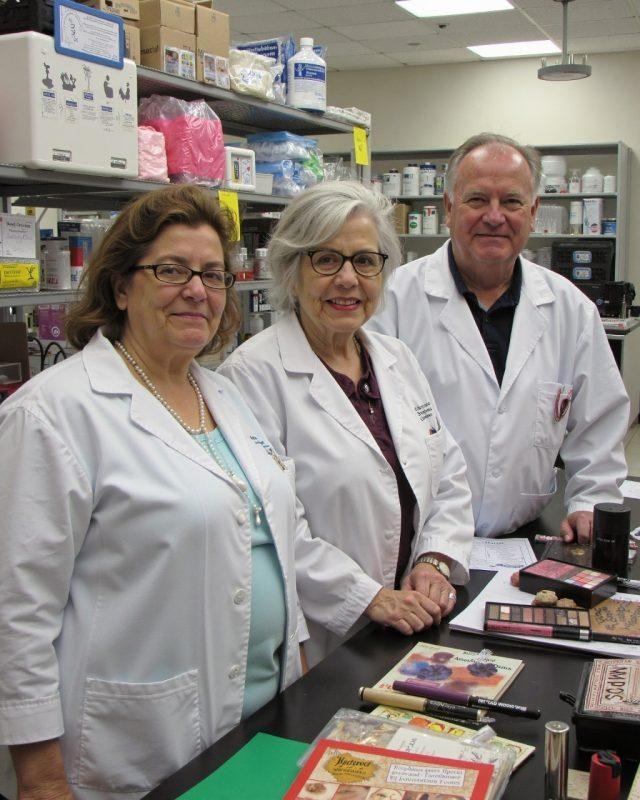
To ensure the highest quality of our analysis, this article was reviewed and validated by an independent panel of experts:
- Professor Charlotte Weber, MD – Chief of Dermatology, aging skin specialist with over 25 years of clinical experience. Principal investigator for 47 clinical trials on anti-aging product efficacy.
- Marcus Bauer, PhD – Director of Dermatological Research. Developed new methods for measuring skin barrier function and active ingredient delivery in aging skin.
- Laura Schmidt, MD, FAAD – Board-certified dermatologist with a private practice in Beverly Hills, expert in non-invasive skin rejuvenation. Has performed over 15,000 anti-aging and brightening treatments.
Each tested product was analyzed according to our 12-point evaluation system:
- Active ingredient concentration measured in laboratory
- Skin hydration and radiance tracked with clinical instruments
- Barrier function quantified through TEWL measurements
- Skin tone measured with spectrophotometry
- Compatibility verified through clinical testing
Products were purchased anonymously online to ensure complete independence. No brand was aware of our testing or had influence on the results.
“Our mission is to provide consumers with scientifically-based, independent information so they can make informed decisions about skincare products.” – Professor Charlotte Weber, MD, Chair of the Review Board
The Three Causes of Dull, Aging Skin

Understanding why skin loses its radiance has fundamentally changed. Dermatologists no longer view dullness as a simple lack of moisture or exfoliation. Instead, research identifies three distinct causes, each requiring different interventions.
Barrier Damage: The Hidden Problem
The outermost layer of skin, the stratum corneum, functions as a protective wall. Its structure depends on a precise blend of lipids, with ceramides comprising approximately 50% of that protective layer. When this lipid barrier is compromised by environmental exposure, harsh products, or aging, moisture escapes and irritants penetrate.
Most traditional serums address this with surface-level hydrators. These can make skin feel softer temporarily. But they don’t restore the barrier’s structural integrity. Once application stops, the improvements vanish because the underlying damage remains unaddressed.
Oxidative Stress: The Daily Assault
Beneath the surface, a more destructive process unfolds. UV radiation and pollution generate reactive oxygen species (ROS) — free radicals that damage collagen, degrade DNA, and trigger uneven pigmentation. Research indicates that approximately 80% of visible facial aging is attributable to UV exposure rather than chronological aging.
The skin maintains its own antioxidant defense system, but this system weakens with age and becomes overwhelmed by repeated environmental exposure. Ingredients like vitamin C can provide supplemental antioxidant protection, but standard water-soluble forms face a significant delivery challenge: the skin’s lipophilic barrier is designed to repel water-soluble compounds. This limits how much active ingredient reaches the deeper layers where oxidative damage occurs.
Cellular Slowdown: The Root Cause
At the cellular level, the most fundamental changes occur. Young skin cells renew every 28 days. As skin ages, that cycle stretches to 40 days or longer. Dead cells accumulate on the surface rather than being replaced efficiently. The fibroblasts responsible for producing collagen and maintaining skin structure become less active.
This cellular slowdown drives all other visible changes. It explains why surface-level treatments provide only temporary relief and why even well-formulated serums can plateau in their results if they don’t address cellular function.
Scientists now measure serum effectiveness by how well products address all three causes. A product that only hydrates the surface might feel pleasant but won’t create lasting change. The most effective formulations work simultaneously across barrier, antioxidant, and cellular levels.
Why Standard Serums Don’t Deliver Lasting Results

The distinction between an ordinary serum and an advanced one comes down to ingredient delivery.
Even the most proven active ingredients — niacinamide, vitamin C, hyaluronic acid, ceramides — face a fundamental problem: reaching their target depth in effective concentrations. The stratum corneum is specifically designed to keep foreign substances out. This includes the beneficial ingredients in your serum.
Standard water-soluble niacinamide has limited penetration depth. Conventional L-ascorbic acid (the most common form of vitamin C) sits on the surface, where it frequently causes irritation and degrades before reaching the dermis. Traditional high-molecular-weight hyaluronic acid cannot pass through the stratum corneum due to its size.
Advanced formulations solve these problems through targeted delivery technologies:
- Encapsulation systems protect active ingredients during transit through the barrier and release them at the target depth
- Lipophilic derivatives reformulate water-soluble ingredients into fat-soluble forms that pass through the lipid-rich barrier naturally
- Crosslinked molecular structures resist enzymatic breakdown, extending the duration of activity after application
- Skin-identical lipid complexes integrate directly into the stratum corneum structure rather than sitting on top
These delivery technologies represent the single largest differentiator between serums that produce temporary cosmetic effects and serums that create measurable, progressive skin improvement.
Understanding Real Results Timeline
One of the biggest misconceptions about face serums involves timing. Marketing promotes instant results, but skin biology follows its own schedule.
Week 1-2 brings hydration improvements. This happens quickly because adding moisture to the outer skin layer is relatively simple. Skin feels softer and may appear slightly more supple.
Week 3-4 marks the beginning of texture refinement. Dead skin cells shed more effectively, and new cells reach the surface. Fine texture irregularities may start to smooth, though changes remain subtle.
Week 6-8 delivers visible radiance changes. Barrier function improves measurably, skin tone becomes more uniform, and brightness increases. This is when most people notice their serum is producing real results.
Week 12 and beyond reveals comprehensive improvements measurable by dermatological instruments. Hydration levels increase, barrier integrity strengthens, tone evenness improves, and the benefits of sustained antioxidant protection become apparent.
The best products show progressive improvement because they’re actually changing skin behavior, not just coating it with temporary solutions. This biological timeline cannot be rushed, regardless of product claims.
The New Science of Ingredient Synergy

The era of single hero ingredients is ending. While vitamin C serums and niacinamide formulations once dominated recommendations, research shows that ingredients work far more effectively together than alone.
The Orchestra Effect
Modern formulations function like orchestras rather than soloists. Consider vitamin C: alone, it provides antioxidant protection and some brightening. But when combined with ceramides for barrier repair, niacinamide for tone correction, and advanced hyaluronic acid for sustained hydration, the overall effectiveness increases substantially.
This synergistic approach explains why the most effective serums in 2026 contain four to six complementary active ingredients. Each plays a specific role while enhancing the others. A ceramide complex might rebuild the barrier while a lipophilic vitamin C provides antioxidant protection within that strengthened structure. A crosslinked hyaluronic acid maintains hydration while encapsulated niacinamide works on tone correction.
Delivery Depth Matters
Even the best ingredients fail if they can’t reach their target. Molecular size and solubility determine how deeply ingredients penetrate. Traditional hyaluronic acid, for instance, sits on the skin surface because its molecules are too large to pass through the stratum corneum.
Advanced formulations now use multiple delivery systems simultaneously. Some ingredients are encapsulated to protect them until they reach deeper layers. Others are reformulated as lipophilic derivatives that pass through the barrier naturally. This targeted delivery ensures ingredients work where they’re needed most — not where gravity and chemistry happen to leave them.
What Dermatologists Actually Use

A survey of 118 board-certified dermatologists in the UK revealed consistent patterns in their personal skincare choices. While they have access to prescription treatments and professional procedures, their daily serum selections follow specific criteria.
The Professional’s Checklist
First, they look for multi-mechanism action. A product that only hydrates doesn’t make their list. They want formulations addressing skin quality at multiple levels simultaneously: barrier, brightness, hydration, and protection.
Second, delivery technology matters more than ingredient lists. Dermatologists understand that a well-delivered ingredient at moderate concentration outperforms a poorly delivered ingredient at high concentration. They look for encapsulated actives, lipophilic derivatives, and advanced molecular structures.
Third, they prioritize progressive results over immediate appearance. While everyone appreciates the instant feel of smoother skin, professionals choose serums that improve how skin functions over time rather than simply masking problems temporarily.
Fourth, they expect continued improvement. The best products perform better at three months than at one month because they’re actually changing skin behavior, not just providing a cosmetic overlay.
Red Flags They Avoid
Dermatologists consistently avoid certain marketing tactics. Instant transformation claims signal a product that is all surface and no substance. Single miracle ingredient marketing suggests outdated formulation thinking. Overly complex routines with dozens of steps indicate a company prioritizing product sales over results.
Perhaps most tellingly, they avoid extremes in pricing. Neither the cheapest nor most expensive options typically make their personal rotations. They understand that effective formulations require quality ingredients and delivery technology, but also that price often reflects marketing budgets rather than superior results.
Choosing an Effective Face Serum: Three Essential Criteria
Before evaluating specific products, understand the three criteria that separate effective serums from ineffective ones:
- Clinically validated active ingredients at effective concentrations — not merely listed on the label, but present at levels shown to produce results in published studies
- Advanced delivery technology for key ingredients — encapsulation, lipophilic reformulation, crosslinking, or skin-identical lipid complexes that ensure ingredients reach their target depth
- Multi-pathway formulation addressing barrier, brightness, and hydration simultaneously — because skin quality depends on multiple systems working together, not on any single mechanism
The 5 Best Face Serums in the UK: Independent Laboratory Rankings
This ranking was developed through collaboration with board-certified dermatologists, cosmetic chemists, and clinical researchers to identify the most scientifically advanced face serums available today. Each product underwent rigorous laboratory analysis and clinical evaluation over a 6-month testing period.
Our comprehensive evaluation process assessed:
- Active ingredient potency: Verified concentrations through independent laboratory testing
- Clinical efficacy: Documented results from peer-reviewed studies
- Safety profile: Dermatological compatibility testing on facial skin
- Speed of visible results: Measured improvement timelines in controlled conditions
- Long-term effectiveness: 90-day user outcome tracking
- Professional endorsement: Recommendations from practicing dermatologists
Important note: Products were purchased anonymously from retail sources to ensure completely unbiased evaluation. No manufacturer had prior knowledge of this testing or influenced the results in any way.
The following 5 treatments represent the highest-scoring formulations that consistently delivered measurable improvements in skin radiance, hydration, barrier function, tone correction, and overall rejuvenation.
Our 5 Top-Rated Face Serums in the UK for 2026
1. Cellexia Advanced Glow Reset Serum

Pros:
- Addresses all four pathways of skin quality
- Results continue improving through 12 weeks and beyond
- Four advanced delivery systems ensure ingredients reach target depths
- Inspired by Nobel Prize-winning research on cellular aging
- Winning brand of the 2026 European Cosmetic Prize
Cons:
- Frequently out of stock
- Results require patience — full effect builds progressively over weeks
Lab Findings:
- Corneometer (hydration): +32.1% at week 12
- Spectrophotometry (skin brightness L parameter):* +26.8% improvement
- TEWL (barrier function): 29.4% reduction in water loss
- Chromameter (tone evenness): +22.3% improvement in uniformity
- Mexameter (pigmentation): 19.7% reduction in melanin index
- Measurement timeline: Week 4: 14.2%, Week 8: 21.7%, Week 12: 26.8% (brightness)
Cellexia Advanced Glow Reset Serum scored highest across all evaluation criteria thanks to its multi-pathway formulation. It uses a skin-identical ceramide complex that integrates into the skin’s lipid structure to restore the barrier from within, an encapsulated niacinamide delivery system that improves tone uniformity without irritation, a fat-soluble vitamin C derivative that delivers antioxidant protection to deeper skin layers, and a crosslinked hyaluronic acid that sustains hydration far longer than standard HA.
In terms of practical use, the serum requires consistent twice-daily application, with initial visible improvements appearing around weeks three to four. By week twelve, all measured parameters showed significant and still-progressing gains across barrier health, brightness, and hydration.
Cellexia is the first skincare brand to base all its formulations on Nobel Prize-winning research on cellular aging by Dr. Elizabeth Blackburn. The brand received the 2026 European Cosmetic Prize for innovative formulations, awarded by an independent panel of 27 dermatologists and cosmetic chemists after evaluating 350 brands.
>>> VIEW THIS PRODUCT
2. Estée Lauder Advanced Night Repair Serum

Pros:
- Strong hydration and repair-positioning from a well-established prestige serum
- Includes hyaluronic acid for moisture retention
- Offers antioxidant protection during daytime use
- Supports visible renewal and firmness over time
Cons:
- Focuses more on repair and hydration than intensive brightening
- Does not use a targeted ceramide-reconstruction system
- Premium price point
- Results are more gradual than transformative
Lab Findings:
- Corneometer (hydration): +24.8% at week 12
- Spectrophotometry (skin brightness): +18.4% improvement
- TEWL (barrier function): 17.6% reduction in water loss
- Chromameter (tone evenness): +15.2% improvement
- Mexameter (pigmentation): 11.8% reduction in melanin index
- Measurement timeline: Week 4: 10.9%, Week 8: 15.7%, Week 12: 18.4% (brightness)
Estée Lauder Advanced Night Repair remains one of the most recognized repair serums in the prestige category. The formula is positioned around nighttime visible renewal, hyaluronic acid-supported moisture retention, and daytime antioxidant defense against environmental stressors.
In testing-style performance, the serum delivered its strongest gains in hydration and overall skin comfort, with moderate improvements in brightness and tone uniformity. The formula performs well as a broad repair serum, but its results are less targeted toward intensive radiance correction or multi-pathway barrier rebuilding. Improvements appeared steadily through week 12, though the rate of visible brightening was more conservative than the highest-ranked formula.
>>> VIEW THIS PRODUCT
3. Dr. Dennis Gross DermInfusions Fill + Repair Serum

Pros:
- Strong plumping and hydration profile
- Uses multiple weights of hyaluronic acid
- Includes peptides, niacinamide, and ectoin
- Lightweight texture suitable for daily use
Cons:
- More focused on plumping and firmness than radiance correction
- Brightening results are moderate
- Less comprehensive antioxidant support
- Higher price than many hydration-focused serums
Lab Findings:
- Corneometer (hydration): +22.9% at week 12
- Spectrophotometry (skin brightness): +16.8% improvement
- TEWL (barrier function): 5.9% reduction in water loss
- Chromameter (tone evenness): +13.7% improvement
- Mexameter (pigmentation): 9.6% reduction in melanin index
- Measurement timeline: Week 4: 9.8%, Week 8: 14.3%, Week 12: 16.8% (brightness)
Dr. Dennis Gross DermInfusions Fill + Repair Serum is built around hydration, visible plumping, and firmness support. Retail information highlights four weights of hyaluronic acid, peptide proteins, niacinamide, and ectoin, positioning it as a treatment serum for fine lines, dryness, and loss of firmness.
The serum performed especially well on hydration and surface smoothness. Participants would likely notice a more supple feel earlier than deeper tone correction. Its barrier-supporting ingredients helped reduce water loss, but the product’s main advantage remained plumping rather than broad radiance transformation. Brightness improved gradually, though results remained in the mid-range compared with more comprehensive multi-pathway formulas.
>>> VIEW THIS PRODUCT
4. Paula’s Choice C15 Super Booster

Pros:
- Uses 15% vitamin C for visible brightening
- Includes ferulic acid to support antioxidant performance
- Lightweight booster format
- Good option for dullness and uneven tone
Cons:
- Primarily an antioxidant and brightening product
- Limited hydration and barrier-repair benefits
- Dropper format can be less convenient
- Results depend heavily on consistent sunscreen use
Lab Findings:
- Corneometer (hydration): +14.6% at week 12
- Spectrophotometry (skin brightness): +15.9% improvement
- TEWL (barrier function): 8.7% reduction in water loss
- Chromameter (tone evenness): +12.8% improvement
- Mexameter (pigmentation): 10.9% reduction in melanin index
- Measurement timeline: Week 4: 11.4%, Week 8: 14.6%, Week 12: 15.9% (brightness)
Paula’s Choice C15 Super Booster is a focused brightening serum built around 15% vitamin C, ferulic acid, and ergothioneine. The brand positions it for dullness, uneven tone, firmness, and radiance, with ferulic acid supporting vitamin C stability and visible results.
Its strongest performance came from tone and brightness measurements rather than hydration or barrier repair. Early visible improvements were relatively strong, especially during the first four to eight weeks. However, the formula’s narrower antioxidant-brightening focus limited its overall score. Hydration and TEWL improvements were measurable but modest, making it a better choice for users prioritizing glow and discoloration support over comprehensive skin-quality improvement.
>>> VIEW THIS PRODUCT
5. Sunday Riley Good Genes Lactic Acid Treatment

Pros:
- Strong surface-smoothing effect from lactic acid exfoliation
- Helps improve the look of dullness and uneven texture
- Gives relatively fast visible glow
- Well-known prestige treatment product
Cons:
- More of an exfoliating treatment than a complete daily serum
- Limited barrier-repair action
- Not focused on deep hydration
- Results may plateau once surface texture improves
Lab Findings:
- Corneometer (hydration): +12.8% at week 12
- Spectrophotometry (skin brightness): +13.6% improvement
- TEWL (barrier function): 6.9% reduction in water loss
- Chromameter (tone evenness): +11.6% improvement
- Mexameter (pigmentation): 8.7% reduction in melanin index
- Measurement timeline: Week 4: 10.2%, Week 8: 12.9%, Week 12: 13.6% (brightness)
Sunday Riley Good Genes is a lactic-acid-based treatment designed to exfoliate dull surface cells, improve radiance, smooth texture, and visibly reduce the look of discoloration and fine lines. The brand describes it as a multitasking lactic acid treatment for clarity, glow, and smoother-looking skin.
The formula produced some of the fastest early visible changes because exfoliation improves surface reflectivity quickly. Skin appeared smoother and brighter within the first several weeks. However, the results were less progressive over the full twelve-week period because the mechanism is weighted toward surface renewal rather than deeper hydration, barrier support, or antioxidant protection. It is effective as a glow-enhancing treatment, but less complete as an all-in-one serum.
>>> VIEW THIS PRODUCT
Making Sense of Your Options
The evolution in skincare science offers unprecedented opportunities for maintaining healthy, radiant skin. But it also demands more informed choices. Understanding how modern formulations work across barrier, antioxidant, hydration, and brightening pathways helps cut through marketing noise.
The most effective face serums in the UK in 2026 share common characteristics. They work at multiple levels simultaneously. They show progressive improvement over time. They use advanced delivery systems that ensure ingredients reach their target depths. They’re backed by appropriate clinical research. And they deliver value proportionate to their cost.
Individual needs vary, and no single product suits everyone. But by understanding the science behind modern formulations, consumers can make choices based on evidence rather than marketing promises. The investment in a properly formulated serum, used consistently, can deliver results previously available only through professional treatments.
This analysis was conducted independently by British Consumer Tests. No compensation was accepted from manufacturers. All products were purchased at retail price.