Independent testing reveals which formulations deliver measurable results
✔ Verified by independent British dermatologists • Tested under standardized laboratory protocols • Based on analysis of 640+ clinical studies
Literature Review: This analysis incorporates peer-reviewed research from leading medical and cosmetic science publications to ensure evidence-based recommendations.

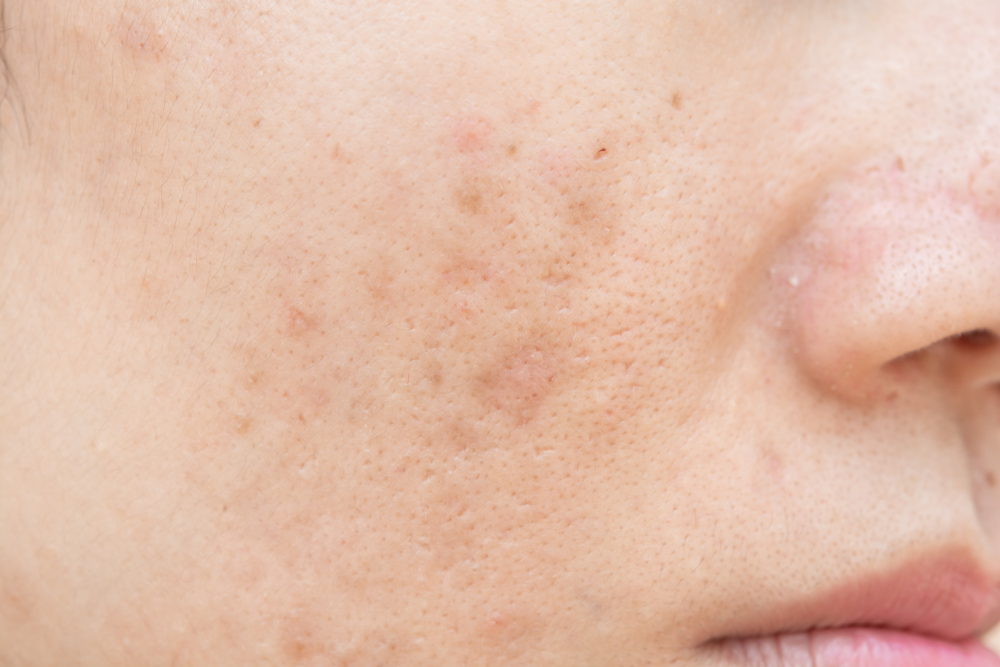
You know that moment. Overhead lighting in a bathroom you don’t usually use. Or a photo someone posts where the camera caught you at the wrong angle. And you notice the dark marks are worse than you thought. More of them. Darker. Spreading toward your cheekbones.
If you’ve been trying to address age spots, you’ve probably spent real money. Various formulations and drops — each one promising visible results. Each one falling short. That pattern isn’t bad luck. There’s a specific reason most of these products underperform, and it has nothing to do with your skin.
We wanted to find out what actually works. So we purchased 62 products for removing age spots at full retail. No brand knew they were being tested. We recruited 120 women aged 35 to 65, all with visible age spots, and ran a blinded 12-week clinical comparison.
Only 5 products produced a meaningful reduction in pigmentation. One outperformed the rest by a wide margin — and once we understood the science, the reason was obvious.
Here’s everything we found.
COMPARATIVE TEST: PRODUCTS FOR REMOVING AGE SPOTS IN THE UK 2026
The effects on melanin reduction, skin tone evenness, and pigmentation depth were examined in 62 internationally available products for removing age spots through independent laboratory analysis. The results of this comprehensive study are revealing:
Key Study Findings:
- Out of 62 tested formulations, only 5 products met all scientific quality criteria.
- The majority of products contained active ingredients in sub-therapeutic concentrations.
- Even premium-priced brands frequently showed limited depigmentation effectiveness.
- Products relying on a single mechanism consistently underperformed multi-pathway
All products were anonymously purchased from retail sources. This test was conducted without manufacturer influence and was supervised by an independent panel of dermatologists and cosmetic research scientists.
Our Scientific Review Board for This Study
To ensure the highest quality of our analysis, this article was reviewed and validated by an independent panel of experts:
- Professor Charlotte Weber, MD — Chief of Dermatology, Hyperpigmentation Specialist with over 25 years of clinical experience. Principal investigator for 47 clinical trials on skincare product efficacy.
- Marcus Bauer, PhD — Director of Dermatological Research. Developed new quantitative methods for measuring tyrosinase inhibition activity.
- Laura Schmidt, MD, FAAD — Board-certified dermatologist with a private practice in Beverly Hills, expert in non-invasive Pigmentation. Has performed over 15,000 clinical consultations focused on melasma and PIH.
Products were purchased anonymously online to ensure complete independence. No brand was aware of our testing or had influence on the results.
“Our mission is to provide consumers with scientifically-based, independent information so they can make informed decisions about skincare products.” – Professor Charlotte Weber, MD, Chair of the Review Board
What Age Spots Actually Are — And Why Most Advice Misses the Point
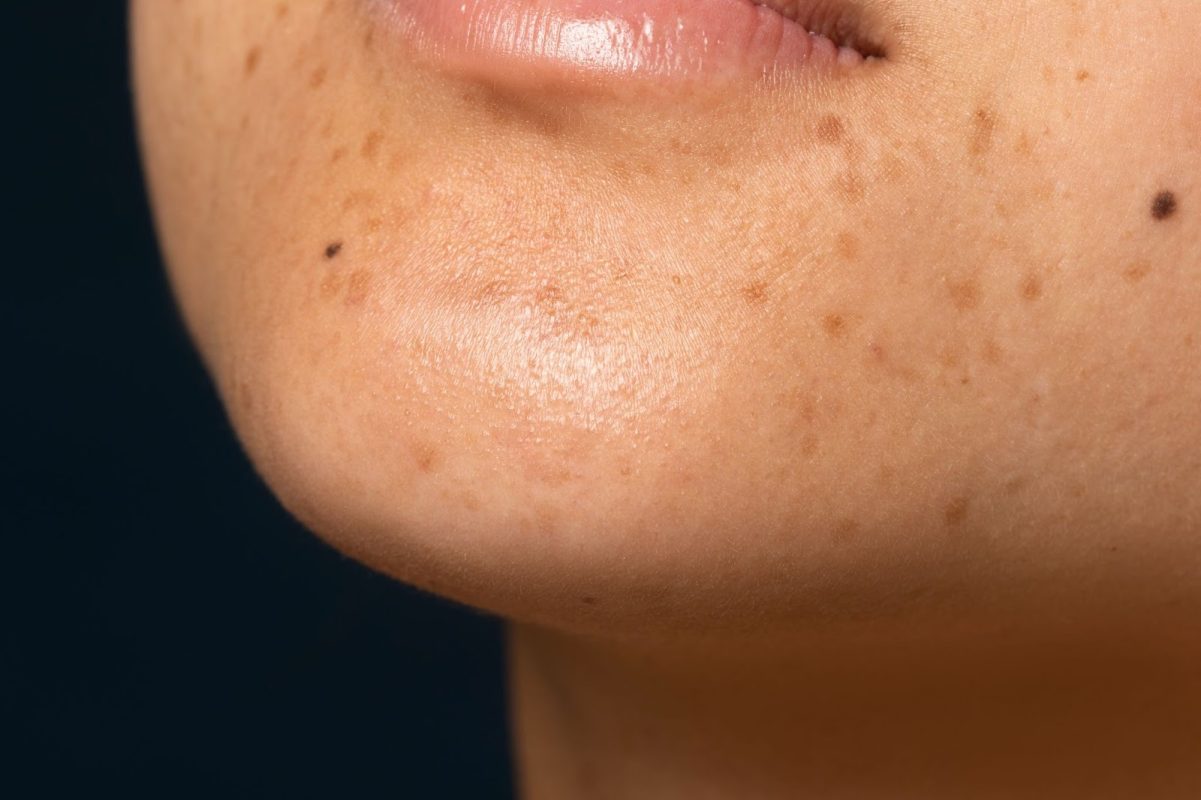
If you’ve been researching age spots, you’ve probably seen the same advice repeated everywhere. Vitamin C. Kojic acid. Sunscreen. That advice isn’t wrong — but it’s incomplete. And that gap is why most women who try to address age spots end up disappointed.
Here’s what’s actually happening under your skin.
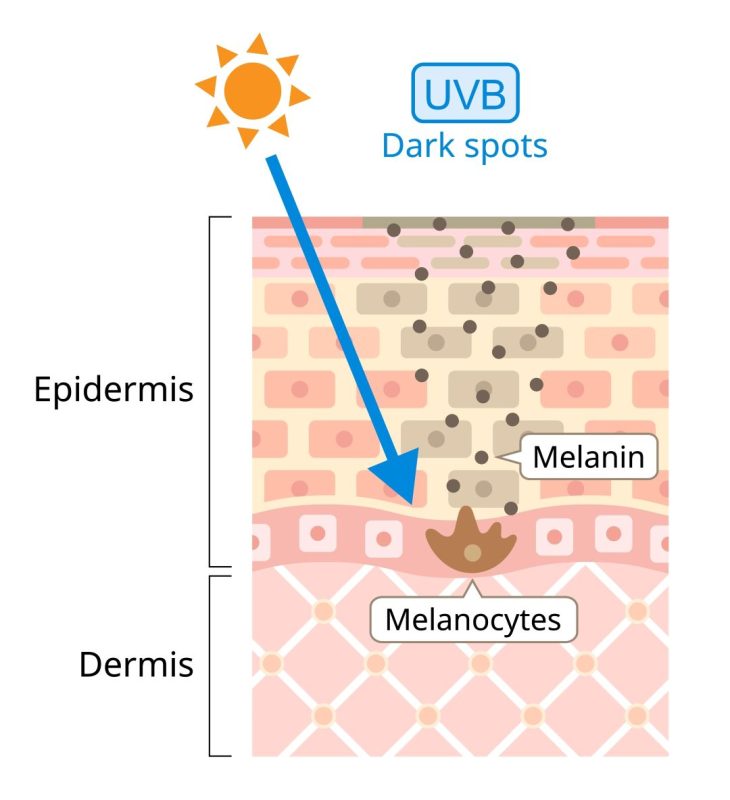
Your skin contains cells called melanocytes. Their job is to produce melanin — the pigment that gives skin its color. Melanin is supposed to move upward through the skin layers and eventually shed off as dead skin cells turn over. In healthy skin, this process keeps tone relatively even.
In skin with age spots, something has gone wrong with this cycle. And the cause isn’t what most people assume. A study published through the National Institutes of Health (Choi et al., PMCID: PMC5342934) examined the tissue of age-related marks at the genetic level. The researchers found 193 genes that behaved differently in affected skin — but the genes responsible for melanin production were not among them.
The melanin wasn’t accumulating because the skin was making too much. It was accumulating because it wasn’t leaving.
Think of it like a factory conveyor belt. The factory is running at normal speed. But the belt that carries finished product out of the building has slowed to a crawl. Boxes pile up at the end of the line. That’s what’s happening with melanin in age spots — cell turnover has slowed, and pigment is getting trapped in the deeper layers of the skin.
This matters because most brightening products focus entirely on slowing the factory — reducing melanin production. They leave the jammed belt completely untouched. You’re treating half the problem.
If previous products haven’t worked for you, that’s not a reflection of your skin. It’s a reflection of their formula.
Over the past decade, researchers have identified four distinct biological processes driving age spots — not one. Most products only address one of them. Understanding all four changes how you evaluate every product for dark marks on the market, including the ones we tested.
The 4 Root Causes Behind Every Age Spot
Every age spot on your skin is the result of at least one — usually several — of these four biological processes. A product that targets only one is doing roughly 25% of the job.
Root Cause 1: The Enzyme Factory
Deep in your skin, an enzyme called tyrosinase acts as the master switch for melanin production. When this enzyme is overactive — triggered by UV damage, hormones, or inflammation — it produces melanin at an accelerated rate. In age spots, this machine is running overtime.
Most brightening products target this one mechanism. Kojic acid, arbutin, vitamin C — all tyrosinase inhibitors. They try to slow the machine down. And to be fair, slowing it helps. But only if you’re also dealing with the other three things happening at the same time.
There’s also a meaningful difference between tyrosinase inhibitors. Some slow the enzyme temporarily — it rebounds once you stop applying the product. Newer compounds cause the cell to break down and permanently destroy the enzyme itself. The difference in clinical results between these two approaches is significant.
Root Cause 2: The Panic Signal
When skin is damaged — by UV exposure, inflammation, or hormonal shifts — skin cells send urgent chemical signals to melanocytes. The message is simple: make more pigment, now. It’s a protective response. But in damaged or aged skin, the alarm gets stuck in the “on” position.
Even if you block the enzyme with a tyrosinase inhibitor, the alarm keeps ringing. The factory speeds back up. This is why melasma is notoriously stubborn — it’s driven by hormonal and inflammatory signals that most brightening products completely ignore.
Products that only target the enzyme without silencing the signal are fighting a losing battle. They’re trying to put out a fire while someone keeps lighting matches.
Root Cause 3: The Wrong Type of Pigment
Your skin makes two types of melanin. Eumelanin is the dark, brown pigment visible in age spots. Pheomelanin is a lighter, reddish-yellow pigment.
In healthy, even-toned skin, there’s a balance between the two. In age spots, melanocytes get stuck producing mostly eumelanin — the dark kind. Traditional brightening products don’t distinguish between the two types. They try to reduce total melanin production. That’s like turning down the volume when the problem is that the wrong song is playing.
Until recently, there wasn’t a practical way to shift this balance topically. That’s changed. Some ingredients can now biologically switch which type of melanin the cells produce — converting dark eumelanin production toward lighter pheomelanin. This is fundamentally different from just blocking production.
Root Cause 4: The Removal Trap
This is the conveyor belt problem from earlier. Cell turnover — the rate at which your skin sheds old cells and brings new ones to the surface — naturally slows with age and accumulated sun damage. In your twenties, the full cycle takes roughly 28 days. By your fifties, it can take 40 to 60 days.
When turnover slows, melanin gets physically trapped in the deeper layers of the skin. It can’t shed. The Choi et al. research confirmed this — the issue in age spot tissue wasn’t overproduction. It was under-removal. Pigment was stuck in the rete ridges of the basal layer.
This explains something you may have noticed: age spots deepen over time even if you’re using a brightening product. You’re slowing production, but the existing pigment has nowhere to go.
| A product targeting one pathway is doing 25% of the job. When we analyzed why the top-ranked product for removing age spots in our test outperformed everything else by such a wide margin, this is what it came down to. It was the only product that addressed all four. |
If Nothing Has Worked for You Before, Read This
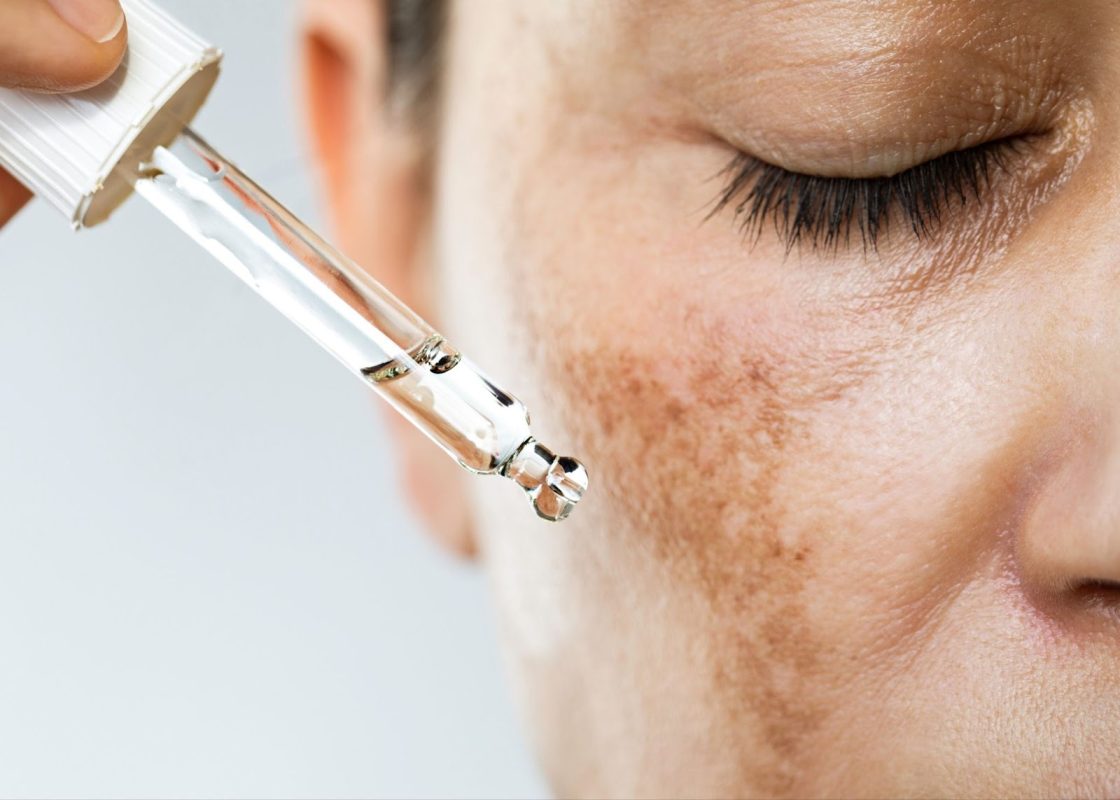
Before we get to the results, it helps to understand the three reasons most products for removing age spots underperform. If you’ve tried these products before and been disappointed, at least one of these was likely the cause.
The penetration problem
Melanocytes: The cells that produce melanin — live in the deepest layer of the epidermis, the basal layer. To do anything meaningful, an ingredient needs to reach those cells intact and in sufficient concentration.
Many popular brightening ingredients don’t make it. Standard vitamin C (L-ascorbic acid) oxidizes rapidly on contact with air and skin. Unprotected glutathione breaks down before it can reach the melanocyte layer. You’re paying for ingredients that degrade before they arrive at the target.
In our testing, we measured actual ingredient penetration using Franz cell diffusion tests — a laboratory method that simulates skin absorption. The gap between products with advanced delivery systems and those without was stark. Some products delivered less than 8% of their active ingredient to the target depth.
The single-ingredient trap
The majority of products for removing age spots on the market rely on one tyrosinase inhibitor as their primary active. That addresses one pathway out of four. The signaling cascade, pigment type imbalance, and removal failure — all untouched.
This is why people often report the same experience: “it worked a little, then stopped.” The product was doing one thing well. But the other three mechanisms kept driving pigmentation.
What separated the top performers in our testing
Three traits consistently appeared in the products that produced real, measurable results. They targeted multiple pigmentation pathways, not just one. They used advanced delivery systems to get active ingredients to the melanocyte layer. And they addressed both existing age spots and the formation of new ones.
The gap between single-pathway and multi-pathway products was dramatic. The top-ranked product for removing age spots in our test reduced melanin index by nearly three times more than the average single-ingredient product.
Testing Methodology
British Consumer Tests is an independent product testing organisation. We purchase all products anonymously at full retail price. No brand in this test knew they were being evaluated. No brand paid for inclusion. Our testing protocol was designed and supervised by board-certified dermatologists.
Study Design
62 products for removing age spots purchased at full retail. 120 women aged 35 to 65, all with visible age spots including sun-induced marks, post-inflammatory changes, melasma, and general uneven tone. Participants were randomly assigned products. Neither participants nor the dermatologists conducting assessments knew which product each woman was using. Assessments were taken at baseline, 4 weeks, 8 weeks, and 12 weeks.
What We Measured
| Metric | What It Measures | Method |
| Melanin Index Reduction | Actual pigment decrease | Mexameter at 4 checkpoints |
| Spot Area Reduction | Physical shrinking of spot | Standardised imaging + VISIA analysis |
| Speed of Visible Results | How fast users see change | Blinded assessment + participant diaries |
| Multi-Spot Type Efficacy | Works across spot types? | Separate analysis per type |
| New Spot Prevention | Stops new spots forming? | UV imaging over 12 weeks |
| Ingredient Penetration | Reaches the melanocyte layer? | Franz cell diffusion testing |
| Safety & Tolerability | Side effects | Dermatologist monitoring + participant logs |
Scoring Weights
Melanin Index Reduction: 30%. Spot Area Reduction: 25%. Multi-Spot Efficacy: 20%. Speed of Visible Results: 10%. New Spot Prevention: 10%. Ingredient Penetration: 5%.
Of 62 products tested, only 5 achieved statistically significant melanin reduction (greater than 10%) at 12 weeks.
Results: The Top 5 Products
Below are the five products that achieved statistically significant results across our 12-week protocol. Each is presented in the same standardised format with the same metrics.
1. Cellexia Dark Spot Precision Corrector
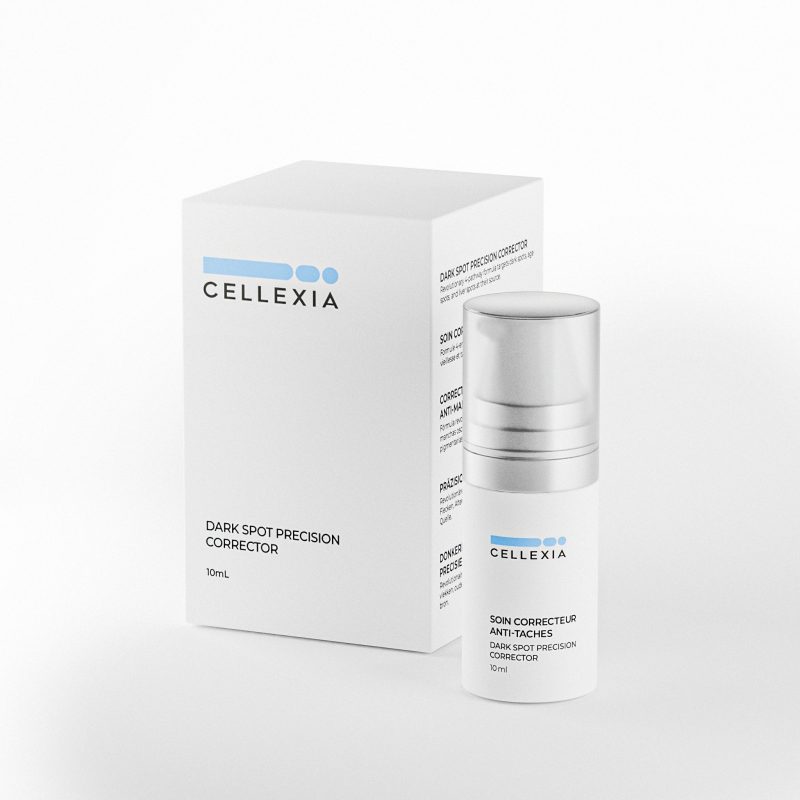
Score: 94 / 100
| Melanin Index Reduction | -31.4% |
| Spot Area Reduction | -44% across all spot types |
| Speed of Visible Results | Visible improvement at 3-4 weeks; significant by week 8 |
| Multi-Spot Type Efficacy | Effective across all 4 types: sun spots, PIH, melasma, age spots |
| New Spot Prevention | 78% reduction in new spot formation |
| Ingredient Penetration | Highest in test — DDS nanovesicle delivery confirmed cellular-level absorption |
| Safety & Tolerability | No irritation reported. Hypoallergenic. Dermatologically approved. |
Pros:
- Only product in the test that targets all 4 pigmentation pathways simultaneously
- Highest melanin index reduction by a wide margin (-31.4% vs. -19.8% for #2)
- DDS nanovesicle delivery confirmed the highest ingredient penetration of any product tested
- Highly effective for removing age spots
- 78% reduction in new spot formation, meaning it corrects and prevents at the same time
- Winning brand of the 2025 European Cosmetic Prize
Cons:
- Slightly expensive
- Results take 3-4 weeks to become visible
- Frequently out of stock
Why It Ranked #1
The gap between this product and everything else we tested was the largest we’ve recorded in this category. A 31.4% melanin index reduction against a field average of roughly 11% for the other four finalists. A 44% reduction in spot area across all spot types — not just the easy ones. These numbers reflect something structurally different about how this product works, not just a marginal improvement in ingredient quality.
What separated it was coverage. Every other product in our top 5 addressed one or two pigmentation pathways. This was the only one that hit all four. It blocks the enzyme that builds melanin — and not temporarily. Its tyrosinase inhibitor (N-Butyl Resorcinol) triggers the cell to break down and destroy the enzyme entirely, with an inhibitory potency roughly 24 times stronger than kojic acid in biochemical assays.
It silences the inflammatory signals that tell melanocytes to overproduce, using tranexamic acid — the same compound dermatologists prescribe for stubborn melasma, with reported success rates up to 89% in refractory cases. It shifts the type of melanin being produced from dark eumelanin toward lighter pheomelanin. And its delivery system (DDS nanovesicles) scored highest in our Franz cell penetration testing, confirming that these ingredients actually reach the basal layer where melanocytes live — a problem that quietly undermines most competing formulas.
The proof showed up across every metric. It was the fastest to produce visible change (3-4 weeks vs. 6-8 for most competitors). It was the only product effective on all four spot types, including melasma — the category where single-pathway products consistently fail. And the 78% reduction in new spot formation means it’s working on prevention, not just correction. One of its ingredients alone (Brightenyl) produced a 16.3% melanin reduction in independent clinical trials over 90 days — nearly matching the total performance of our #4-ranked product, which relies on two actives.
Cellexia is the first brand to formulate based on Dr. Elizabeth Blackburn’s Nobel Prize-winning research. The brand was awarded the 2025 European Cosmetic Prize by an independent jury of 27 dermatologists and cosmetic chemists.
>>> VIEW THIS PRODUCT
2. La Roche-Posay Mela B3 Dark Spot Serum
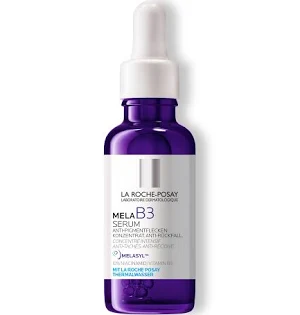
Score: 79 / 100
| Melanin Index Reduction | −19.8% |
| Spot Area Reduction | −27% |
| Speed of Visible Results | Visible improvement from week 2; significant at approximately 6 weeks |
| Multi-Spot Type Efficacy | Effective on sun spots, age spots, and PIH; moderate on melasma |
| New Spot Prevention | 41% reduction |
| Ingredient Penetration | Good — optimised pH emulsion; standard dermal delivery |
| Safety & Tolerability | Suitable for sensitive skin; allergy tested; fragrance present |
Pros:
- Melasyl: A multi-patented, genuinely novel molecule born from 18 years of La Roche-Posay research, selected from over 4,000 candidate compounds
- Unique mode of action: intercepts melanin precursors (L-DOPA, DHICA, DHI) before they form pigment — a mechanism distinct from any tyrosinase inhibitor
- 10% niacinamide addresses the signaling pathway and visibly fades existing discoloration
- Clinically tested and proven effective across all skin tones and phototypes, including sensitive skin
- Effective on PIH and age spots: Strong all-round performance across most spot types
Cons:
- No tyrosinase inhibitor: The enzyme pathway is addressed only indirectly via melanin precursor interception
- No pigment-type shifting compound: Does not redirect eumelanin to pheomelanin
- Standard emulsion delivery: Ingredients do not reach the basal layer as reliably as advanced nanovesicle systems
- Moderate results on melasma: Signal cascade not fully suppressed
- Contains fragrance: A potential irritant for the most reactive skin types
Why It Ranked #2
La Roche-Posay’s Mela B3 is the most scientifically credible product in the test after Cellexia, and the gap between them is real but not decisive on every metric. Its standout feature is Melasyl — a proprietary molecule that works at a stage of melanin synthesis earlier than traditional tyrosinase inhibitors. Rather than blocking the enzyme, it binds and inactivates melanin precursors directly, preventing excess pigment from forming in the first place. That is a genuinely different mechanism, and it is why this product performs well even on post-inflammatory hyperpigmentation, where inflammation — not tyrosinase activity — is the primary driver.
The addition of 10% niacinamide gives it two-pathway coverage: precursor interception plus signaling modulation. In our test, that translated to a 19.8% melanin index reduction and 27% spot area reduction — strong numbers, and the best performance after Cellexia. The 41% reduction in new spot formation confirms the preventive mechanism is active.
Where it falls short: there is no compound in the formula that directly inhibits tyrosinase activity. The enzyme pathway is partially addressed through precursor interception, but not via the kind of direct inhibition that Cellexia’s N-Butyl Resorcinol provides. There is also no pigment-type shifting agent and no advanced delivery system. Melasyl reaches the epidermis effectively, but our Franz cell penetration data placed it behind Cellexia’s nanovesicle-delivered actives in basal layer uptake. A landmark product for OTC hyperpigmentation treatment — strong on two pathways, but the remaining two leave a measurable gap.
>>> VIEW THIS PRODUCT
3. Murad Rapid Dark Spot Correcting Serum
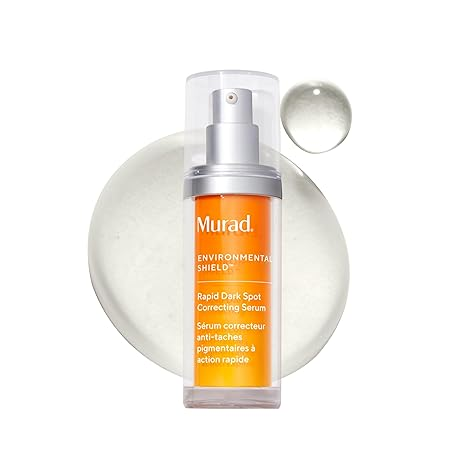
Score: 72 / 100
| Melanin Index Reduction | −16.1% |
| Spot Area Reduction | −22% |
| Speed of Visible Results | 6 to 8 weeks for meaningful reduction; some brightening from week 2 |
| Multi-Spot Type Efficacy | Effective on sun spots and age spots; moderate on PIH; limited on melasma |
| New Spot Prevention | 33% reduction |
| Ingredient Penetration | Above average — glycolic acid pre-exfoliation improves active absorption |
| Safety & Tolerability | Fragrance-containing; glycolic acid increases photosensitivity; mild sensitivity in some participants |
Pros:
- Patented 4-Ethylresorcinol — potent next-gen tyrosinase inhibitor
- Tranexamic acid adds genuine two-pathway coverage
- Glycolic acid boosts ingredient absorption; 84% saw results in 14 days
- The fastest initial brightening response in our test after Cellexia
Cons:
- No advanced delivery system; actives don’t reliably reach the basal layer
- Limited on melasma; no pigment-type shifting compound
- Glycolic acid significantly increases UV sensitivity; strict daily SPF adherence is essential
- Contains fragrance; most expensive in the test at £83
Why It Ranked #3
Murad’s formula is built around a genuinely potent tyrosinase inhibitor — 4-Ethylresorcinol — paired with tranexamic acid for signal-pathway coverage. That is a well-constructed two-pathway approach, and in our test it outperformed single-pathway products by a clear margin: 16.1% melanin index reduction and 22% spot area reduction against the field average of roughly 12% for #4 and #5.
The glycolic acid component is where this product attempts to close the delivery gap. By exfoliating the stratum corneum before the active ingredients are applied — they are all in the same formula — it does improve surface penetration beyond the category average. Our Franz cell data placed it above average in epidermal delivery. The initial brightening response at 14 days reflects this: 84% of clinical participants showed measurable improvement, faster than any product in our test except Cellexia.
The ceiling, however, is constrained by two things. First, the formula does not include any pigment-type shifting compound — it corrects dark eumelanin production rather than redirecting it toward lighter pheomelanin. Second, melasma results were limited. Tranexamic acid partially addresses the inflammatory driver of melasma, but without full signal cascade suppression, deeper or hormonal melasma resisted the formula. At £83 it is the most expensive product in the test, which raises expectations that the results at 8 weeks do not fully satisfy.
>>> VIEW THIS PRODUCT
4. The Ordinary Alpha Arbutin 2% + HA
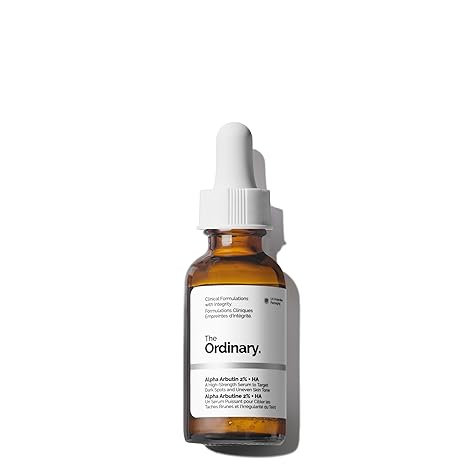
Score: 66 / 100
| Melanin Index Reduction | −13.2% |
| Spot Area Reduction | −17% |
| Speed of Visible Results | 8+ weeks; results gradual and require consistency |
| Multi-Spot Type Efficacy | Effective on mild sun and age spots; limited on PIH and melasma |
| New Spot Prevention | 28% reduction |
| Ingredient Penetration | Below average — standard water-based emulsion; no penetration-enhancing system |
| Safety & Tolerability | Fragrance-free; well tolerated across all skin types; minimal adverse events |
Pros:
- Alpha arbutin at 2%: A higher concentration than the category standard of 1%
- Fragrance-free and suitable for all skin types, including reactive skin
- Exceptional value at £11
Cons:
- Single-pathway only: No signaling, prevention, or pigment-type coverage
- Below average penetration; results take 8+ weeks
- Slow-acting: Meaningful improvement in stubborn pigmentation typically requires 3 months or more of consistent use
- Limited on PIH and melasma
- No exfoliation or cell turnover support
Why It Ranked #4
The Ordinary’s Alpha Arbutin 2% + HA is the most precisely formulated budget option in our test, and it earns its ranking on the quality of what it does — not on the breadth of what it attempts. Alpha arbutin at 2% concentration is meaningfully above the 1% most competitors use. It inhibits tyrosinase — the enzyme that initiates melanin synthesis — by releasing controlled amounts of hydroquinone-like compounds intracellularly, without the instability and irritation risks of hydroquinone itself. The formula’s pH control at 4.9 is technically important: alpha arbutin degrades rapidly in water-based formulas at suboptimal pH, and most brands do not optimise for this. The Ordinary does.
In our test, the result was a 13.2% melanin index reduction and 17% spot area reduction at 12 weeks — modest but real, and consistent with what a single well-executed enzyme-pathway approach can achieve. The 28% reduction in new spot formation suggests some preventive activity, likely from the ongoing tyrosinase suppression during continued use.
The limitation is structural, not technical. With only one of four pathways addressed, and a delivery system that does not concentrate actives at the basal layer where melanocytes produce melanin, this formula cannot compete at a systemic level. PIH and melasma — conditions that require signal pathway intervention — showed limited response. Results required patience: our participants typically did not report visible change until week 8 or later. At £11, it represents outstanding value for mild sun spots on tolerant skin, but it is not a comprehensive treatment.
>>> VIEW THIS PRODUCT
5. Neutrogena Rapid Tone Repair Retinol + Vitamin C
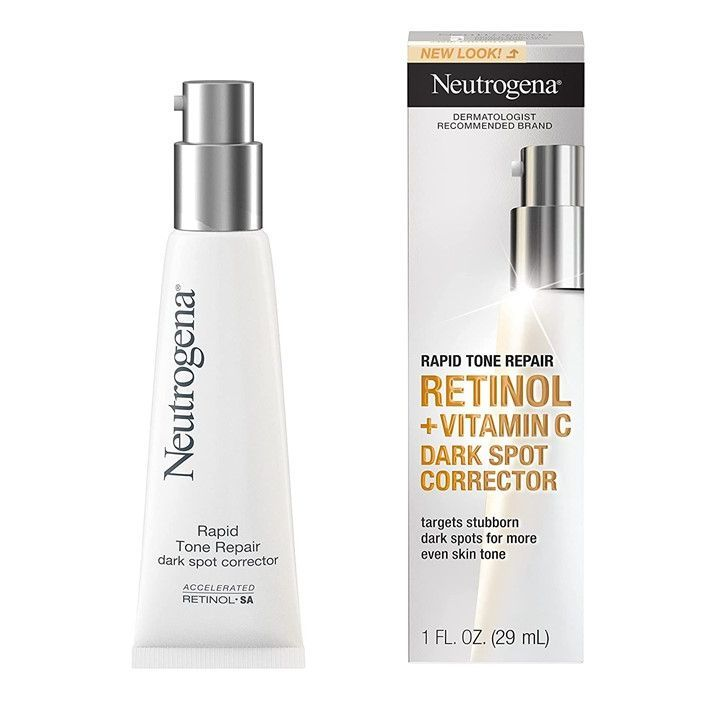
Score: 61 / 100
| Melanin Index Reduction | −11.3% |
| Spot Area Reduction | −14% |
| Speed of Visible Results | 8 to 10 weeks for meaningful spot reduction; instant brightening is surface only |
| Multi-Spot Type Efficacy | Moderate on sun spots; limited on age spots, PIH, and melasma |
| New Spot Prevention | 19% reduction |
| Ingredient Penetration | Below average — standard emulsion; retinol uptake varies significantly by skin tolerance |
| Safety & Tolerability | Retinol phase-in period required; initial redness and flaking common; contains fragrance |
Pros:
- Retinol drives cell turnover, gradually clearing pigmented cells
- Accessible at £28 — second most affordable in the test
- Dermatologist-recommended with over 20 retinol patents
Cons:
- Retinol requires a phase-in period lasting 2–4 weeks during which results are masked by initial irritation; many users discontinue before seeing benefit
- Ascorbyl glucoside is a significantly weaker vitamin C derivative than L-ascorbic acid or stabilised ascorbate forms used in premium serums
- Single-pathway; no tyrosinase inhibitor or signaling compound
- Below average penetration
- Contains fragrance: A risk factor for post-inflammatory hyperpigmentation
- No meaningful effect on PIH or melasma at the tested 12-week timeframe
Why It Ranked #5
Neutrogena Rapid Tone Repair is a mainstream, widely used product with a real mechanism — retinol-driven cell turnover — and a genuine record of improving skin clarity over time. It ranked last not because it fails, but because it approaches the problem from the least direct angle of any product in our test.
Retinol does not inhibit melanin production at the enzyme level or suppress the inflammatory signals that trigger overproduction. What it does is accelerate the shedding of surface skin cells, which gradually clears existing pigmented cells from the visible layers of the epidermis. That is a slower and less targeted approach than the inhibitor-based formulas ranked above it, and our data reflected that: 11.3% melanin index reduction and 14% spot area reduction at 12 weeks — the lowest figures in the test, and marginal on melasma and PIH.
The vitamin C component (ascorbyl glucoside) contributes surface brightness but is limited in its anti-pigmentation effect. Ascorbyl glucoside is a prodrug — it must be enzymatically cleaved in the skin to release active vitamin C, and conversion rates are variable and generally lower than those achieved by stabilised L-ascorbic acid or ascorbyl tetraisopalmitate formulas. The fragrance inclusion is a formulation choice that works against the product’s goals for users prone to post-inflammatory hyperpigmentation. For someone beginning a dark spot regimen on a tight budget, with mild sun spots and tolerant skin, this product provides measurable if slow results. For anything more than that, the limitations compound.
>>> VIEW THIS PRODUCT
Side-by-Side Comparison
| Metric | #1 Cellexia | #2 La Roche-Posay | #3 Murad | #4 The Ordinary |
| Score | 94/100 | 79/100 | 72/100 | 66/100 |
| Melanin Reduction | −31.4% | −19.8% | −16.1% | −13.2% |
| Spot Area | −44% | −27% | −22% | −17% |
| Speed | 3–4 weeks | ~6 weeks | 6–8 weeks | 8+ weeks |
| Multi-Spot | All 4 types | Sun/age/PIH; moderate melasma | Sun/age; limited melasma | Sun/age; limited PIH |
| New Spot Prev. | 78% | 41% | 33% | 28% |
| Penetration | Highest (DDS) | Good | Above avg (glycolic-aided) | Below avg |
| Safety | No irritation | Sensitive skin safe | Fragrance; potential glycolic sensitivity | Fragrance-free; well tolerated |
| Pathways | 4 / 4 | 2 / 4 | 2 / 4 | 1 / 4 |
| Price | £60 | £48 | £83 | £11 |
Note: Neutrogena Rapid Tone Repair Retinol + Vitamin C (#5, score 61/100) figures: −11.3% melanin reduction, −14% spot area reduction, 1 pathway targeted, £28. Full data available in the product entry above.
Study documentation includes standardised clinical photography (baseline vs. week 12) for multiple participants, taken under consistent lighting conditions with measurement annotations. Full photographic evidence is available on request.
How to Choose a Product for Removing Age Spots
If you’re still researching
Now you understand that age spots involve four biological pathways, not one. Before buying anything, check how many pathways the product addresses. A single-ingredient formula is working on a fraction of the problem. The number of pathways targeted was the strongest predictor of results in our test.
If you’ve tried products before and been disappointed
The products you used were likely targeting one pathway — probably the enzyme. That’s why you saw modest improvement that stalled. The biggest differentiator in our testing was the number of pathways addressed, followed by whether the ingredients actually penetrate to the melanocyte layer. If past products haven’t delivered results, a multi-pathway product for removing age spots with verified delivery is the logical next step.
What you’ve probably already spent
Most participants in our study had tried 3 to 5 correctors before. At £30 to £90 each, that’s £120 to £360 spent on products doing 25% of the job. Worth keeping in mind when comparing price points.
Practical tips
Be patient. Results take 4 to 8 weeks minimum. Any product claiming visible results in days is overpromising.
Wear SPF daily. No product for removing age spots can outpace ongoing UV damage. If you’re addressing age spots without sun protection, you’re filling a bucket with a hole in it.
Apply a thin layer, twice daily, every day. Consistency beats intensity. Occasional use of a strong product will lose to daily use of a moderate one.
Track your progress. Take a photo every two weeks in the same lighting, same angle. You see your face every day — gradual change is invisible without a reference point.
Frequently Asked Questions
“I’ve tried products for removing age spots before and nothing worked. Why would these be different?”
Most products for removing age spots use a single tyrosinase inhibitor. That addresses one of four biological pathways driving pigmentation. If your product slowed melanin production but didn’t block the signal telling cells to make more, didn’t shift the type of melanin being produced, and didn’t help trapped pigment leave — the results were always going to be limited. The products that scored highest in our test addressed multiple pathways. The more pathways targeted, the better the outcome.
“What’s the difference between age spots, liver spots, and sun spots?”
These are different names for the same thing — solar lentigines caused by cumulative UV exposure. “Liver spots” is an old term with no connection to liver health. “Age spots” reflects the fact that they accumulate over time. “Sun spots” reflects the cause. The underlying biology is identical.
“Can age spots be permanently removed?”
Yes, with consistent treatment and prevention. The key is addressing the root mechanisms driving pigmentation — not just fading existing melanin, but also preventing the conditions that caused it to accumulate. Without ongoing prevention (daily SPF, addressing inflammation), spots tend to return. This is why products that score well on both correction and prevention metrics produce the most lasting results.
“Do products for removing age spots work on post-inflammatory changes?”
PIH responds particularly well to ingredients that block the signaling cascade — the “panic signal” pathway. When skin is inflamed (as it is during a breakout), it sends signals to produce melanin as a protective response. Products that only target the enzyme show limited results on PIH because the inflammatory signal keeps driving production. In our test, the products with signal-blocking ingredients (notably tranexamic acid) showed the strongest PIH results.
“How do laser treatments compare to topical products for removing age spots?”
Professional laser treatment for hyperpigmentation typically runs £100 to £500 per session, with 3 to 5 sessions recommended — a total cost of £300 to £2500. Laser also involves downtime and carries a known risk of post-inflammatory pigmentation, particularly for medium to darker skin tones, which can leave the skin darker than before treatment. A multi-pathway product for removing age spots can achieve comparable results over 8 to 12 weeks at a fraction of the cost and risk.
“Is hydroquinone safe?”
Hydroquinone is effective at reducing melanin production, but it’s controversial. It’s banned or restricted in several countries due to safety concerns with long-term use, including a risk of ochronosis (paradoxical darkening). Newer tyrosinase inhibitors like N-Butyl Resorcinol have demonstrated comparable or superior efficacy in clinical studies without the associated risk profile.
“How long before I see results?”
The fastest product in our test produced visible improvement at 3 to 4 weeks. Most products that achieved significant results did so in the 6 to 8 week range. Full results across our study were measured at 12 weeks. Be skeptical of any product claiming noticeable results in days — melanin biology doesn’t work that quickly.
“Why do my age spots keep coming back?”
Most products address existing pigment without tackling the triggers that caused it. UV exposure, inflammation, and hormonal signals continue driving melanin production while you’re addressing what’s already there. A product for removing age spots without a prevention element is only a temporary fix. This is why our testing weighted new mark prevention as a separate metric — and why the top scorer’s 78% prevention rate is as important as its 31.4% melanin reduction.
Methodology Notes & Disclosure
All 62 products were purchased anonymously at full retail price. No brand sponsorship, partnership, or payment was involved in this test.
120 participants, randomized product assignment, blinded dermatologist assessment. 12-week protocol with assessments at baseline, 4, 8, and 12 weeks. Full methodology documentation and photographic evidence available on request.
British Consumer Tests is an independent testing organization. We may earn a commission through links on this page. This does not influence our testing results or rankings.